
Minnesota: Twins Cities’ publisher returns after spending a year in Africa, reporting & filming
By Our Staff Writer
ALL PHOTOGRAPHS BY GLOBAL EKKLESIA
Global Ekklesia’s editor-publisher, James Kokulo Fasuekoi returned to Minneapolis, Minnesota, Monday, June 9, with plenty of stories to tell and write after spending an entire year in Africa, particularly in Liberia, doing news reporting and filming.
One year is so far the longest time Fasuekoi has stayed in his native Liberia since he fled the country in 1999, a year after convicted former warlord Charles Taylor took power. He had been covering Liberia’s intermittent bloody war for ten years; eight of which he served as war correspondent for The Associated Press.

Now a Christian Journalist, the former war photographer left the U.S. last June at the invitation of his friend, a former Liberian diplomat and entrepreneur, Mr. Jackson K. George Jr., to help revamp President Joseph Nyuma Boakai’s charity that had gone dormant since its creation in 2018.
Working with Pres. Boakai’s charity
During its first year of operation, the JNB Foundation, under its new leadership, managed to galvanize massive support including fundings and resources at both national and international levels to bring most needed relief to the Liberian population, especially in rural settings, long neglected by past regimes.
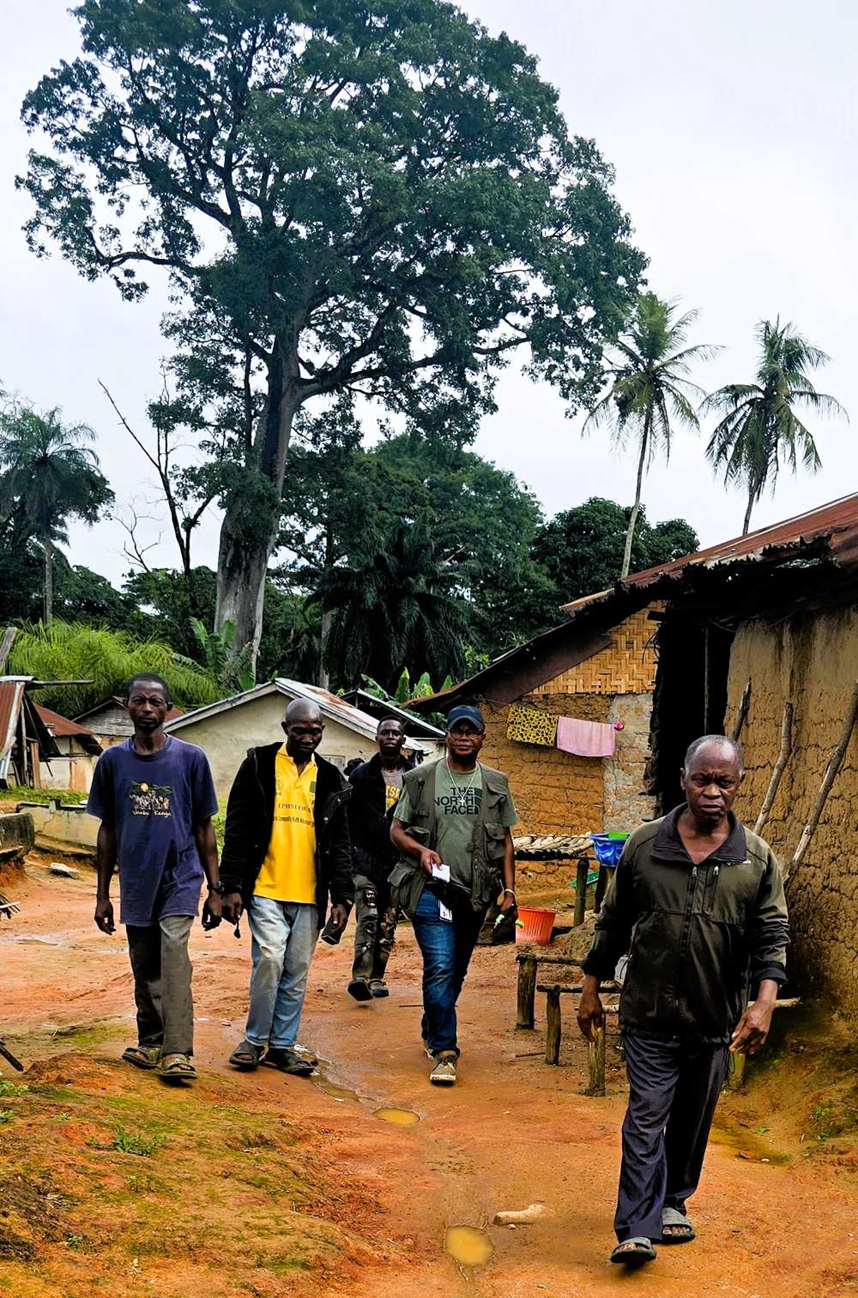
At the start of his work with the charity in mid 2024, one of Fasuekoi’s tasks included traveling across Liberia with his boss, Mr. George and assessing the humanitarian needs of people who live in northern Liberia’s Lofa County, home of President Boakai.

For an entire week, their team combed Kolahun-Foya districts, and ended in Worsonga, home to Amb. Boakai, located along Sierra Leone’s border. There, they evaluated work on stalled projects, identified new ones, like wells and toilet construction for markets and communities in these commercial hubs.
At the time Boakai’s government took over, a few years ago, sectors such as education, sanitation and health which are key factors on the current government’s 6-Pillars Agenda, had virtually reached crisis level, or were in total limbo, a situation that clearly demanded action.
Forested town-clinics, hospitals, ship blood work late
Take for instance, some of the major regional cities or towns such as Tubmanburg and Gbopolu situated within fifty to hundred miles from the capital, could barely get lab work to Monrovia in a week or two, attributing this to “lack of resources.”

Indeed, major clinics and hospitals in those places had no X-ray machines, or at least “functioning” ones to work with. As a result, healthcare workers had to first take hundreds of blood specimens from patients during hospital visits, or visits to towns and villages before shipping to Monrovia to be processed.
Though this may sound unfathomable in 2024-2025, but again those are some of the stories nurses and doctors from Tubmanburg City and the forested Bopolu, told recently after they gathered at the JNB foundation in Rehab, Paynesville to receive modern State-of-the-Art X-ray machines.
Thanks to Amb. Joseph Nyuma Boakai’s efforts for he seems to know more than any of Liberia’s ex-leaders what it means to have rural hospitals function properly, coming too from a poor background in a rural setting and having had a mother who suffered disability early on.
Colorado-US based Project C.U.R.E. & other donors
Caught on camera in July 2024, also by former Associated Press news photographer, Fasuekoi, was one of the charity’s initial medical supplies shipment to Liberia worth U.S. $450,000. This came from its partner and donor, Project C.U.R.E. of Colorado, USA.
The consignment included everything-from floor-cleaning tools to operating room gowns, gloves, syringes and equipment, needed for a hospital to function properly. A large portion-like the rest of the other shipment by JNB Foundation-was turned over to the John F. Kennedy Hospital, the largest referral hospital in Liberia.

Also documented on films by Fasuekoi was the arrival, off-loading and distribution of a batch of 31 sets of incubators, meant to help save lives of premature infants in a country left deeply scarred by civil war. At the cost of U.S. $16,000 each, they were shipped by the foundation’s donor-partners in Dubai, the EAU, at the request of President Boakai and again distributed free among major healthcare facilities.
And like President Boakai had done occasionally whenever a major shipment for his charity from donors arrived in Liberia, he strolled down the street to the foundation’s headquarters (near his backyard) and inspected the goods, expressing deep gratitude to the donor-shippers.
He then turned to Mr. Jackson George Jr., and asked if he would give some incubators to “Zorzor Curran Lutheran Hospital” and the “Voinjama Tellewoyan Hospital.” These two major health facilities near Liberia’s northern borders have for decades stood firmed, making sure no elusive “disease” enters Liberia undetected.
The corroded maternity delivery bed replaced
Then came August-September when the foundation’s medical team stumbled upon one corroded but shabby instrument in the Mary Horton Memorial Health Center’s maternity ward-it was a child-delivery bed.

Now, a part of that hospital’s medical relics, the bed had sat in that room for more than ten years, and had been used to birth hundreds of babies, if not thousands, according to the clinic’s chief nurse, Clarena Fendor who had worked there many years. She believes the bed could even be as old as 20 years or more.
When the foundation’s team first arrived at the hospital, they discovered the bed’s rails were stained with fresh blood. Horrified by its age, Fasuekoi ran a news series with moving pictures on this discovery.

Within a week the JNB Foundation was back to Totota Clinic with a new delivery bed and other accessories for the hospital to replace the rusty one. Nurses and patients rejoiced and hailed President Boakai.
But that wasn’t all: the charity dropped off a second child-delivery bed in the weeks that followed in that this region of Liberia occupied by Kpelle people, is highly populated which impacts the clinic as far as providing healthcare is concerned. (Fasuekoi’s series and striking digital photos can be viewed at both the jnbfoundation.com and globalekklesia.com websites).
President Joseph Boakai alone can’t fix Liberia
But the reality remains that neither President Boakai alone, nor his government, can handle Liberia’s woes, especially in regard to the responsibilities of the nurses and doctors themselves. Or how each performs, views his/her daily tasks, in a drive to help create a healthy and functioning nation.

In 2024-2025, for example, the charity’s team, during most of its urban setting tours, found that “placentas” recovered from delivery operation rooms weren’t properly disposed of. Nurses had them burnt instead in the backyards of their facilities, not far from activity centers or porches where patients and health workers sat and ate lunches.
This new development brought teeth-grinding moments to both Director George and Fasuekoi, both of whom had lived for decades in an advanced nation like America before returning to help their country, Liberia.
This no doubt deeply worried Jackson George, just as Writer James Fasuekoi. “It was hard to believe that health workers could let this happen,” Fasuekoi, who arrived Monday, said amid grim smiles.

Mr. George confronted senior nurses over such acts without hesitation, knowing the doctors and nurses still needed his foundation’s aid. Whenever he inquired as to why they could not find a better way to get rid of the “placenta” and their other “medical wastes,” most nurses, embarrassed, shrugged off their shoulders, and offered no hopeful clues.
Baltimore, MD Neurologist Zumo meets top doctors
Amid the situation, US-based practising neurologist, Dr. Lawrence A. Zumo, visited the country and also served as lecturer at a seminar held at the John F. Kennedy Hospital meant for top doctors. Dr. Zumo currently works at a hospital in Baltimore, Manyland, and has been shuttling between the U.S. and Liberia, since 2017, carrying out medical mission drives.

Filmed by Fasuekoi and his news team, Dr. Zumo shared helpful new tips as well as information on emerging techniques regarding how other advanced nations such as the U.S.A. now treat neuro-diseases like epilepsy, unlike science did, some 30-50 years ago.
In November of 2024, Ekklesia’s publisher, assisted by intern photographer, Ruth Gaye, followed Dr. Zumo’s work activities in the capital, Monrovia: this was intended to create a special news and digital file on the works of Dr. Zumo, a son of Lofa and Grand Bassa parents.

Our crew further rode with Dr. Zumo to the central Liberia Bong County town of Totota, where he met with distinguished Liberian orator and former Toledo University professor, Dr. Sakui W.G. Malakpa. Dr. Malakpa is now president of Liberia’s newly formed Lutheran University.
Dr. Malakapa, visually impaired, is the author of “Black Professor, White University.” He hails from the Lorma Gospel town of Wozi, near Fissebu, Lofa County. And like Mr. George, he’s a friend of President Boakai who requested that he return to Liberia and assist with the nation’s reform process.

Christian evangelism & other humanitarian works
In Liberia, whenever Fasuekoi wasn’t busy with the foundation’s work, he often paired with other Christians to perform evangelistic and humanitarian services.
In the capital, he worked with youths, women empowerment groups, and also visited local orphanages and filmed their hardship and joy. He went to Liberia Christian School for the Blind near the Atlantic Ocean and also documented real life stories, as told by the campus’ leader Mr. Kota, and other residents.

He also devoted weekends to filming the life of Catherine Joe, an amputee who lives near Owen Grove, Buchanan Highway, Liberia. Now 45, she’s a former choir director of the United Methodist Church in Behneewein. She’s a single mom with 6 surviving children.
Quite surprisingly, Catherine has one of the biggest farms among her ethnic Bassa and Lorma people living the Owen Grove area. And whether people agree or not Catherine Joe is viewed in this region as the FACE of the current government’s agricultural effort although she works to produce enough food to feed her kids and also sell for a living.
Unfortunately, disaster struck her farm in December 2024, destroying much of her farm’s money-making crops such as eggplants, wild African bitter balls and peppers which could be seen stretching across acres of farmland.

She sobbed after meeting Fasuekoi in December, perhaps feeling hopeful he would do something about the dying crops. The publisher had heard news of her misfortune and stopped by Catherine’s farm to meet her as he was returning from the Coastal city of Buchanan.
In the weeks thereafter, Journalist Fasuekoi managed to raise funds to purchase a small water pump machine that she Catherine could use during summer to cultivate her gardens and farms.
People, especially youths, going crazy about Jesus Christ!
In Monrovia itself and other places of the country, Fasuekoi found people going almost crazy about Jesus Christ, our LORD. The good news is the majority of this group are youths between 20-30. They carried bumper stickers bearing supposed paintings, portraits, some as “grotesque” as they may be of Christ The Messiah!

In Foya Kamala itself, the birthplace of the current president, a street banner of Jesus Christ was visibly torn into half in a public square at a three-way intersection.
This area is heavily dominated by non-Christian believers with Kissi, President Boakai’s own ethnic group, and Gbandi, accounting for a considerable portion of the overall Muslims population in the region.

Nevertheless, Educator and Reverence Moses Borbor still maintains a treasured painting of Christ in his small office at the children mission school he established years ago to help combat illiteracy in this region.

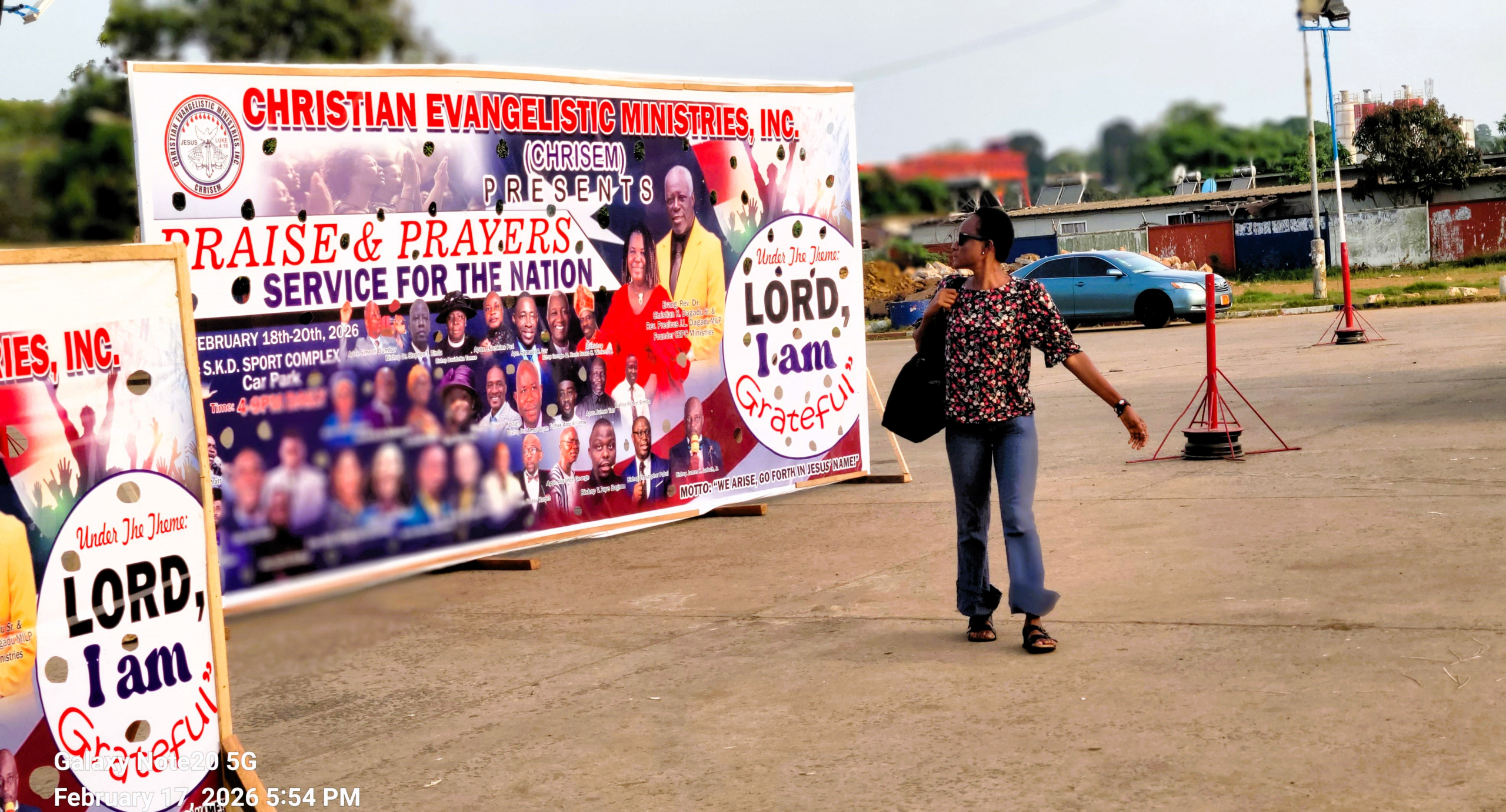
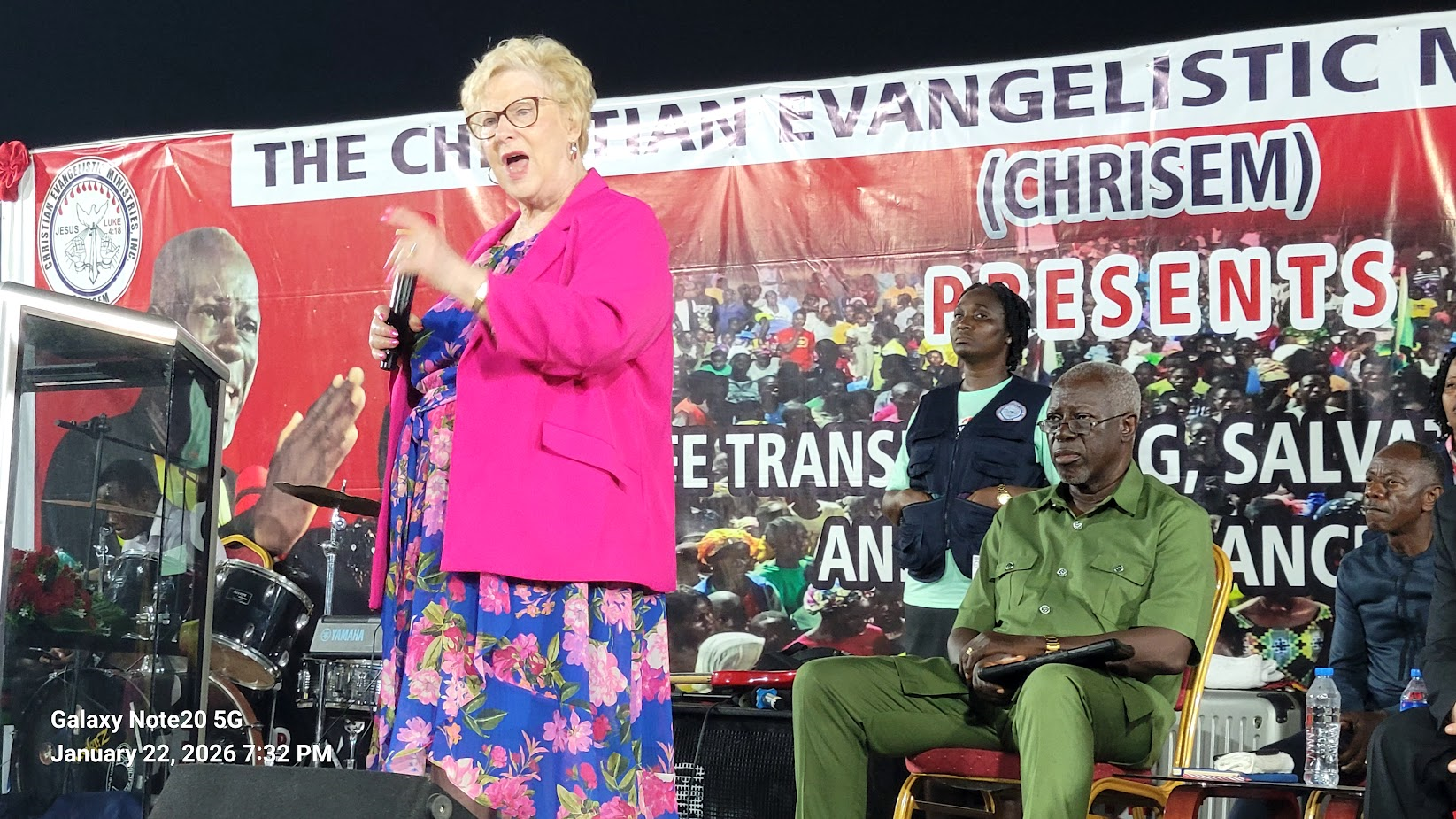
In 2024, Fasuekoi’s Ekklesia covered a national church crusade in the capital. Some of the headlines went: “Liberia: Punks dismantled Gospel crusade stage in Jacob Town. But church quickly reconstructs altar to kick off event.” “At Crusade 2025: Defiant Liberian preacher, Rev. Precious Dagadu, boos the devil!” These were among our most widely read stories of the year and thanks to our editor who saw it fit to feature both.
Later, Fasuekoi set up and led the first Global Ekklesia tour across the country with Lofa County as the target. He was accompanied by Ekklesia’s intern photographer, Mrs. Ruth Gaye. The trip was meant to help the crew understand How the Gospel of Christ reached their own Lorma people-who live in valleys, hills and mountains-in present day Lofa in northern Liberia.

Both spent days traveling on motorbikes which had to maneuver their ways through muddy waters, or on slippery hills, valleys as well as jungles. In the famous Zorzor District town of Wozi, northwest of Fissebu, where early U.S. Missionaries first settled and began teaching the Bible, the townspeople, especially women, cheered Fasuekoi and Ruth on arrival.
Fasuekoi, a lover of culture and history, found the spot of the town’s first church was erected by the early missionaries. He also spotted and filmed the church’s corroded bell long tossed away after the Lutheran Church collapsed and missionaries left. It was lying next to Dr. Sakui Malakpa’s late father’s house.
Crossing Liberia-Guinea Border in pursuit of the Gospel
Thereafter, both Ruth and Fasuekoi made their way into neighboring Guinea on motorbike. This crossing-point had been tough since the 60s, 70s and 80s, and it was quite a surprise to him how they had crossed with ease! The Guinean soldiers posted there presently seemed much friendlier than those of the past.
They stopped along the way, in Lorma towns and villages that were at one point regarded as “desert land” for the Gospel of Christ. Now, churches are planted in some of the towns, allowing locals from various faiths including converted Muslims, to worship together with Lorma new converts.

In Oulemai (actually, pronounced “Wulemai”), the crew found a small worship center, the first to emerge since the beginning of this ancient Lorma Town. “Oulemai” is the French spelling is south of Koryema, the district headquarters: it remains steep in African Traditions, so much that even the town’s Poro College was active at the time of our crew’s visit.
Like the women’s Sande, some Born-Again Christians as well as non-Poro conformists, otherwise, Same sex promoters, have argued that Poro (which is for the men) stands at variance with Christianity.
Yet, Liberia’s famous educator and theologian, Dr. Abba G.G. Karnga, a former classroom teacher described by Pres. Boakai, as a nation foundation builder, cites the Poro in his CV as the first institution where he said he received his first education.
Even though Dr. Karnga, as a young man and a graduate of one of Oklahoma’s best universities has long severed ties with such traditional institutions, he strongly frowned at the level of Western ignorance and propaganda that had beclouded this culture.
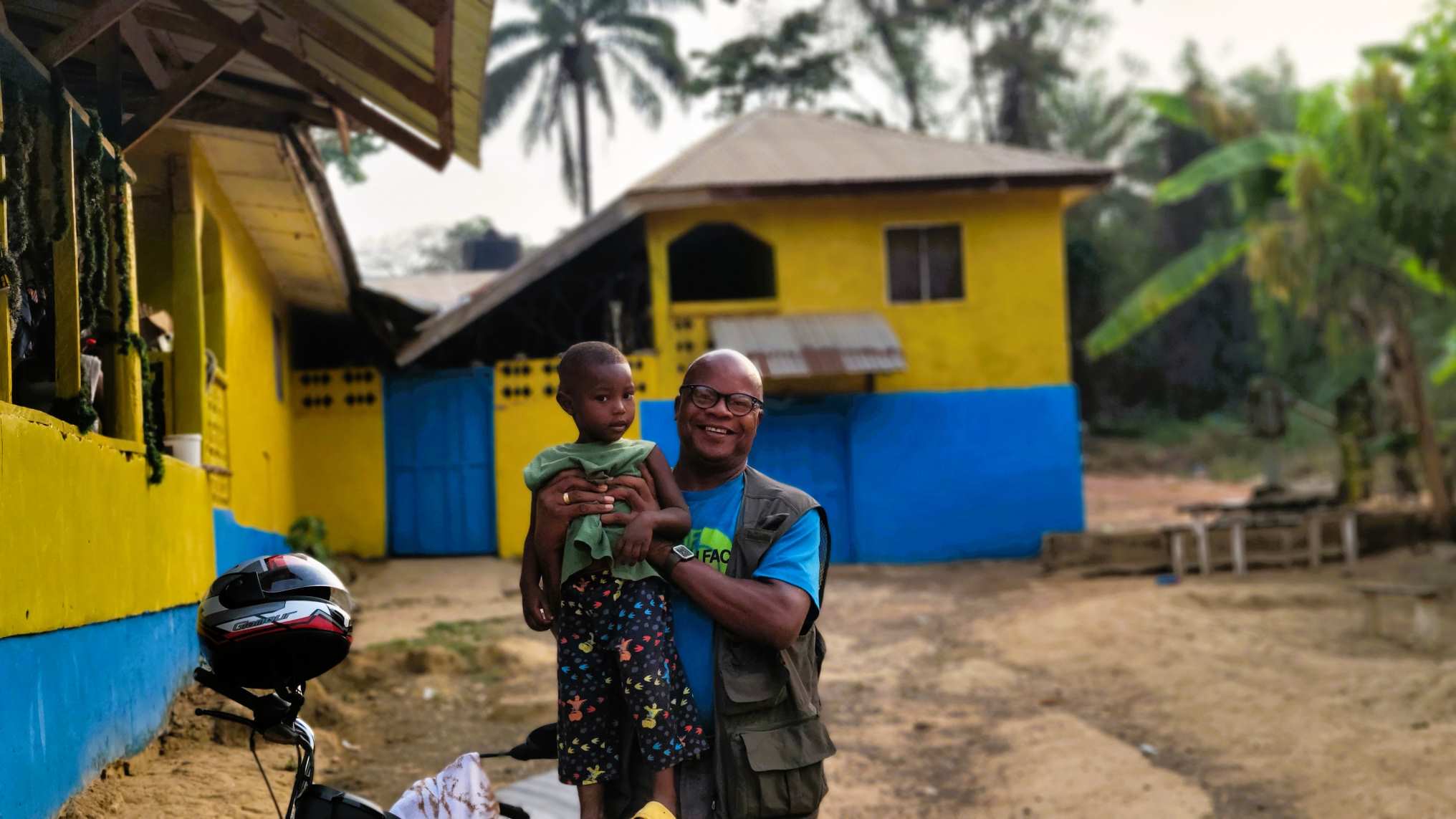
Banner photograph shows Christian Journalist Fasuekoi having fun with a kid in the Sanoyea District town of Kelebei, early this year.
UNDATED!

Attention readers: This is our fourth year of publishing free! Kindly consider supporting our efforts by donating any affordable amount to Global Ekklesia soon if you wish to read more of our production. Your donations would help pay for the smooth running of this website without interruption! Remember it’s only through Global Ekklesia that you get news other publications will never give you. When you support us, you’ve supported Christian Journalism Worldwide! Contact us via (fasuekoi1@gmail.com), 6124486340-U.S.; or 231778675407 & 231887467304-Liberia.