
Liberia: Why we must teach our civil war history in schools, colleges?
The government of President Joseph Nyuma Boakai is so focused on reconciliation and the establishment of a War & Economic Crimes Court (WECC) which is absolutely fine. Yet, it is by error masking another key element of the brutal war in which some 300,000 perished: the teaching of our war history in schools and colleges in Liberia. Doing so would honor the memories of our fallen victims and serve as a warning to unborn generations against fanning the flames of war!
ALL PHOTOGRAPHS BY RUTH GAYE

Liberia’s post-war recovery process: massacre series

By James Kokulo Fasuekoi|Editor-Publisher
From Carter Camp, Harbel, Liberia
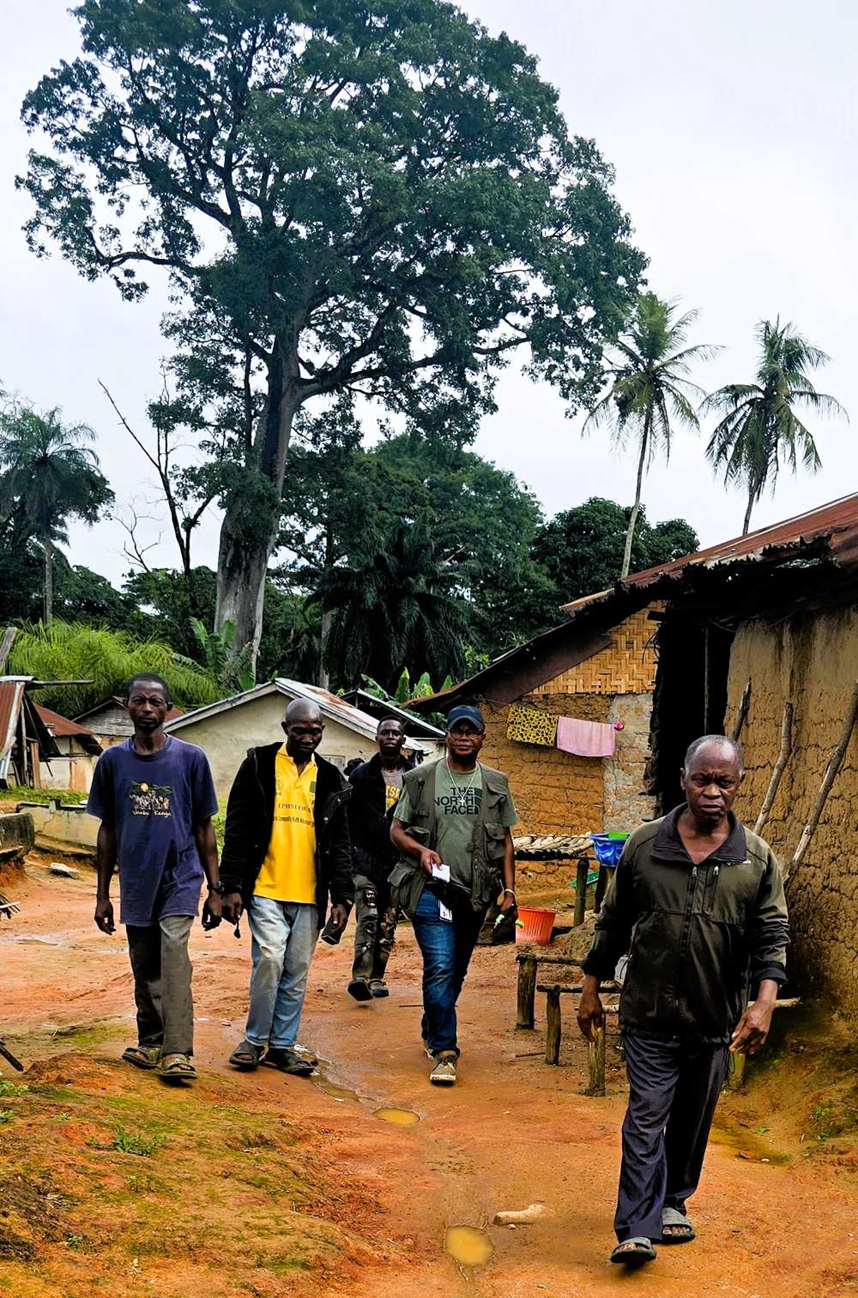
When I arrived in Carter Camp June 6, this year and first saw Princess, aged around 15-16, and asked if she knew of the mass killings that took place in the very spot we stood, some 32 years ago, her reaction was rather awkward!
“Yes, I heard some kinda killing went on here before,” she retorted. Young Princess was hooking grass at the edge of the camp, now reduced to a few huts after that horrifying massacre of June 6, 1993.
“No, it wasn’t some ‘kinda killing.’ Over 600 people, including small children, women, men, and older folks actually died here,” I responded, with a grim expression on my face.

“I was here with my cameras, under a special military escort. I saw dead bodies all over here and I took pictures of everything,” I told her.
She stood dumbstruck, trying to hold onto her garden tool. This was followed by a deep stare as if she was confused, trying to find a word to say something.
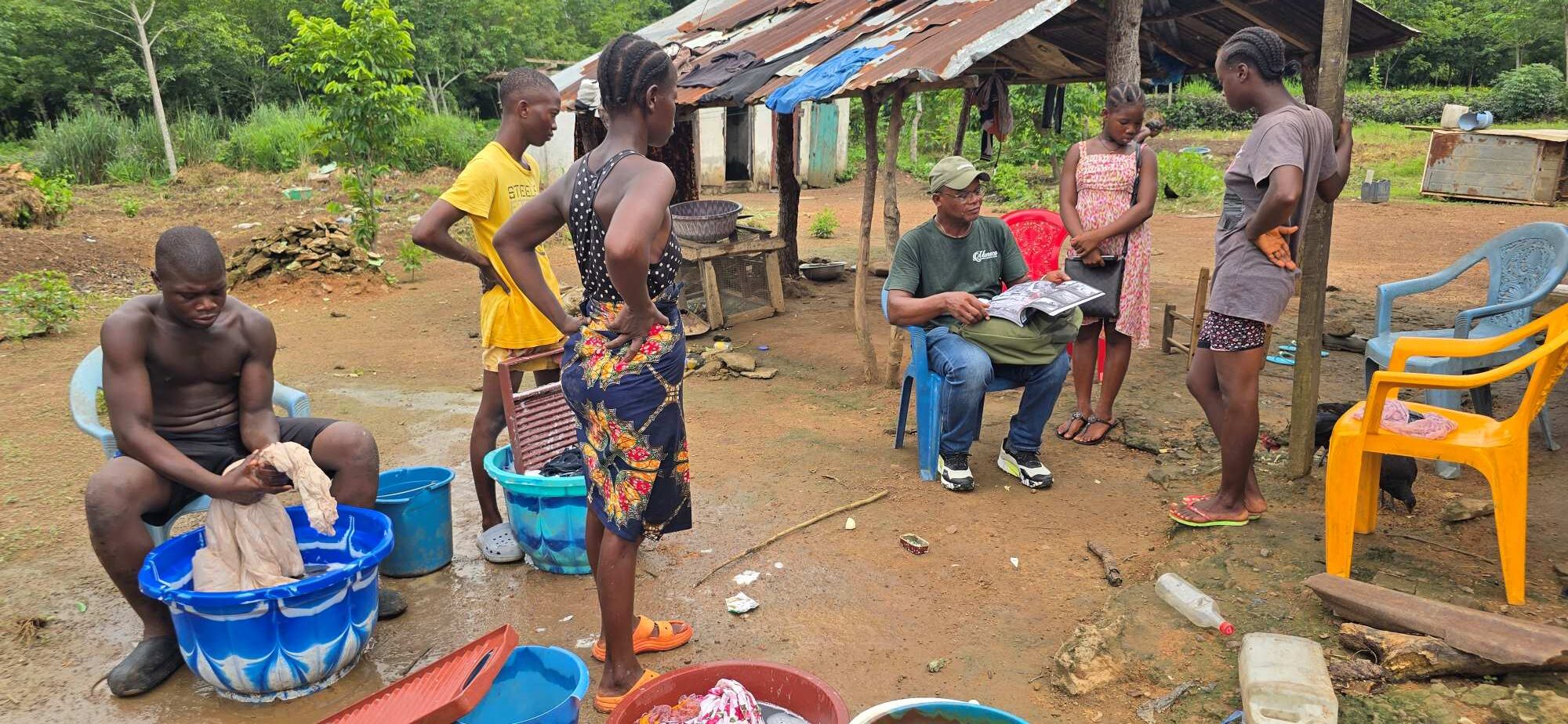
A bunch of her peers who had been doing chores nearby soon stopped doing their garden jobs, dishwashing and laundry and started listening to our conversation.
I pulled off my back pad, grabbed a copy of my civil war book and began to show them documentary footage of the Carter Camp massacre.

One should’ve watched how shocked some of them appeared, hearing from someone who knew much of the story and had published a book on the mass killings of that fateful day.
But Princess wasn’t the only person among a handful of villagers in the old camp clueless about what happened in that camp which until a decade ago wasn’t a part of Firestone, the world’s giant tire company of Nashville, Tennessee.
Pastor George Monhin too, the man who has been running the Aladura Church here since 2009 told me he had no solid information about the mass murders of June 6, 1993, beyond news that he said he heard in passing.
Like Princess’ friends, Pastor Monhin was in total shock after I opened my book, and he saw the pictorial documentary of the killings. This was the first time he said he had seen photographs of the murders.

Pastor Monhin couldn’t stop thanking me for taking risks and capturing this piece of history during those darkest hours.
My June 6 visit to the Carter Camp Memorial also afforded Global Ekklesia’s Staff Photographer Ruth Gaye and her niece, Little Success the opportunity to learn about the massacre firsthand, having heard of it too, in passing at school.
Ruth was too young to remember the Carter Camp Firestone genocide as she was only 7-year-old at the time of the mass murders in 1993, a time she lived at a refugee camp in Guinea with her mother.

Her niece, Success, on the other hand, was born in 2013. And we’ve never left the gravesite without offering a special prayer over the lost souls.
Whatever the case, one thing seems clear since I started taking Ruth and Success along to visit the Carter Camp Memorial. They too now feel the losses, allowing both to see the tragedy differently than they did before.
If we can teach youths of Liberia our civil war history and encourage schools and colleges to do field trips with students to all of our genocide memorials including Carter Camp, it would be a victory for both the victims and their relatives.

Otherwise, we, living victims, would be playing to the wishes of the perpetrators of Liberian genocides for after all, their prayer and hope is to keep news of such heinous acts secret which should never be the case.
I suggest that the government should print the entire TRC final report of 2009 in booklet form and have them distributed in our schools and colleges for little or nothing as part of the nation’s current “unity & reconciliation” drive.
Banner photograph: Some of Carter Camp current residents listened as I narrate the camp’s massacre story and show photographs while Success looks on.
James Kokulo Fasuekoi is an award-winning journalist, author, documentary writer and news photographer. He previously covered civil wars in West Africa for both local and international news media, including The Associated Press. Listed on his college’s Dean’s List for academic excellence in Pennsylvania, USA, he holds an AA Degree in Biblical Theology, and the equivalent of a degree in Journalism & Communications (Pennsylvania Board of Education-2010/11). He became a Bush Foundation Scholar twice in 2017. Fasuekoi’s work as a civil war journalist in West Africa during the 80s-90s, brought him face-to-face with the law in his native Liberia and the U.S. where the Fed subpoenaed him twice to give testimonies as lead witness in two major international war crimes trials of 2017 & 2018 in Philadelphia. Once a West African national ballet dancer, Fasuekoi now writes, photographs and dances for Jesus Christ. Read profile @ https://globalekklesia.com/profile/