
U.S. based doctor wants the death penalty for drugs trafficker in his native Liberia
Dr. Lawrence Zumo, born of a Lofa farmer and a market woman from Grand Bassa isn’t your typical medical doctor. He’s also a social activist. Having studied medicine abroad and specialized in Neurology, he graduated with distinction on top of his class in the U.S. and began work by 2001 as a full-fledged Neurologist, prescribing medications to cure diseases in patients. As Ekklesia reports, Zumo is now prescribing a cure for a new type of disease ravaging his native Liberia in West Africa.
By James Kokulo Fasuekoi|Editor-Publisher
ALL PHOTOGRAPHS BY RUTH G. GAYE AND AUTHOR
Dr. Lawrence Amos Zumo, a certified US-based neurologist residing in Baltimore, Maryland, USA, has been practicing medicine since 2001 and seeking healing in patients with neuro related disorders such as epilepsy. To cure a new kind of sickness-drugs, now wrecking his native Liberia, Zumo is seeking the death penalty as the best remedy for anyone found trafficking drugs to the West African country of Liberia.
Dr. Zumo made the argument last September during the Annual Liberian Diaspora Conference that took place in Washington DC. His proposal was greeted with mixed reactions among delegates who were preparing to brainstorm Liberia’s mountainous problems-from investment and high unemployment rate at home, to lack of urgent healthcare services, especially for the poor.

The conference was expected to dive deeper into the country’s weak healthcare system, the heavy influx of narcotics into the country now posing serious health risks especially to the lives of youths. However, Dr. Zumo, along with a few other panelists were quickly called off before they could finish or defend their presentation despite being invited by conference’s facilitators to speak.
According to Dr. Zumo, about 90 minutes had initially been allotted to him and his colleagues for this all-important topic on the health sector; 15 minutes each for every presenter, while 45 minutes would be used for Q&A. Instead, Zumo said, he and his colleagues were finally limited to only a few minutes each, not exceeding five minutes in all, a time that could not let him say much.

In a short online video, a group of delegates applauded Zumo’s suggestion for the death penalty while others laughed or stayed mute. Zumo, in an interview later said he was restricted to only a few minutes to speak on such key issues as the country’s health sector which had reached near collapse before President Joseph Boakai Sr. took power in January 2024.
Whatever the case may be, Zumo’s declaration clearly appeared to have sparked a debate within intellectual circle and will go on for a long while in this West Africa nation. He tells this writer he’s prepared to face the Liberian National Journalists Union (ALJA) in the U.S. on this issue or even travel to Liberia and appear before an Executive or Parliamentarian committee to defend his stance on drugs.

Dr. Zumo is himself a distinguished scholar and an expert in neurosciences. He currently serves as an Associate Clinical Professor of Neurology in the U.S. and is co-author of The Boy Who Loved Math, a novel translated into his Native Bassa Language, featuring one little Mathematical genius named as ERDO’S BASSA.
He has so far made six Medical Missions to Liberia, beginning 2018, using his own resources to treat patients at far lower discounted rates, especially in rural settings where epilepsy, Zumo’s specialty, remains prevalent despite medical advances.
Meanwhile, his medical team just concluded its 2025 outreach mission last week in Grand Bassa, the home of his aging mother. He couldn’t come this year due to pressing matters, he tells Ekklesia.

Dr. Zumo and his team have also carried out community outreach programs in central and southeastern Liberia, teaching parents caring for epilepsy patients to better understand the disease’s nature, outbreaks, and how to better care for loved ones. He was often accompanied by his wife Mrs. Janet Zumo.
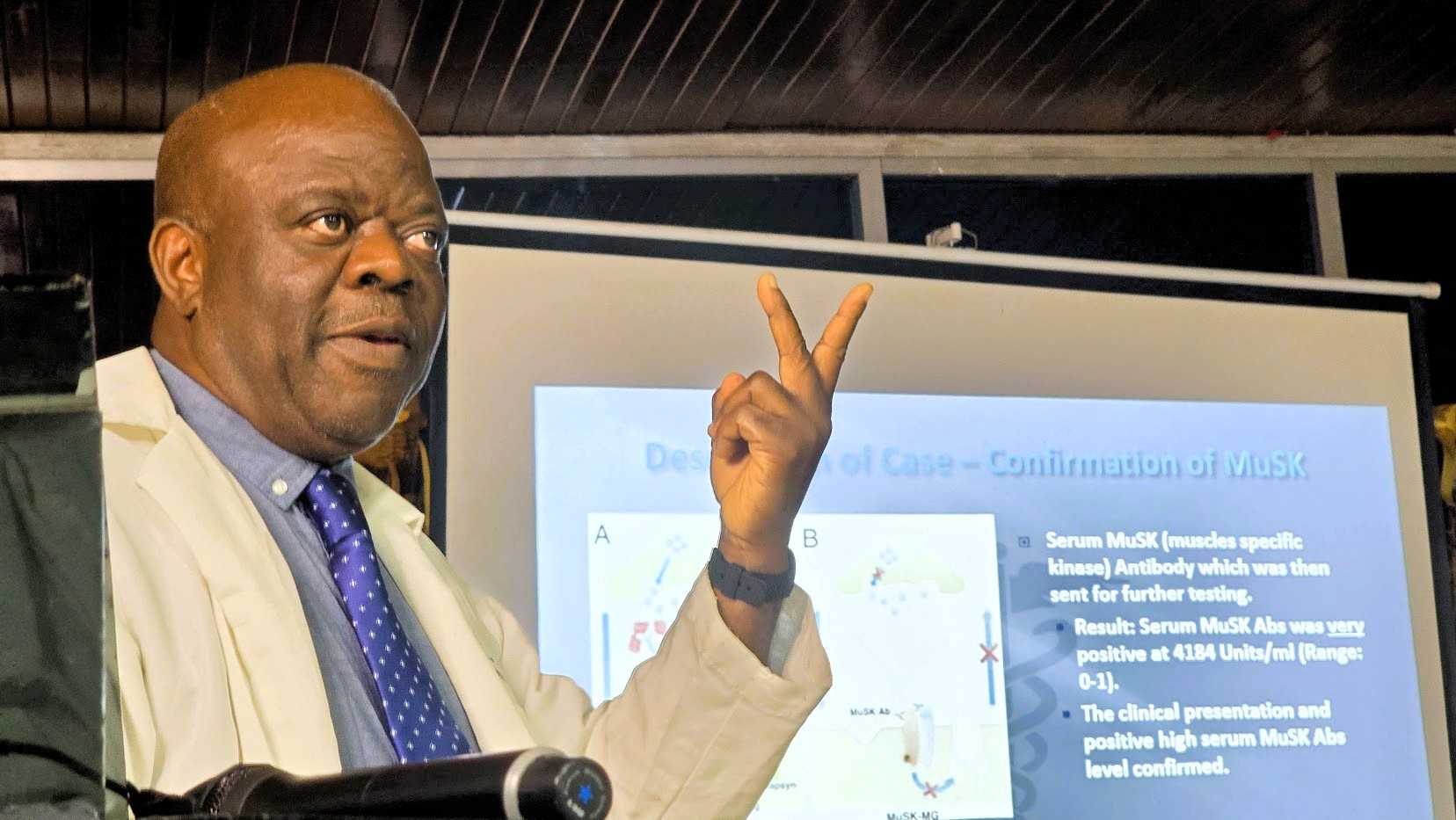
Dr. Zumo has volunteered multiple times during his Medical Mission trips, giving free lectures in medicine at seminars hosted by major hospitals here, including the John F. Kennedy Hospital, the largest referral hospital in the country.

In mid-October 2024, for example, Zumo lectured top medical doctors of JFK Hospital about the emerging challenges and advantages in medicine, and the new ways U.S. doctors now treat epilepsy disease, an event which was filmed by Ekklesia.

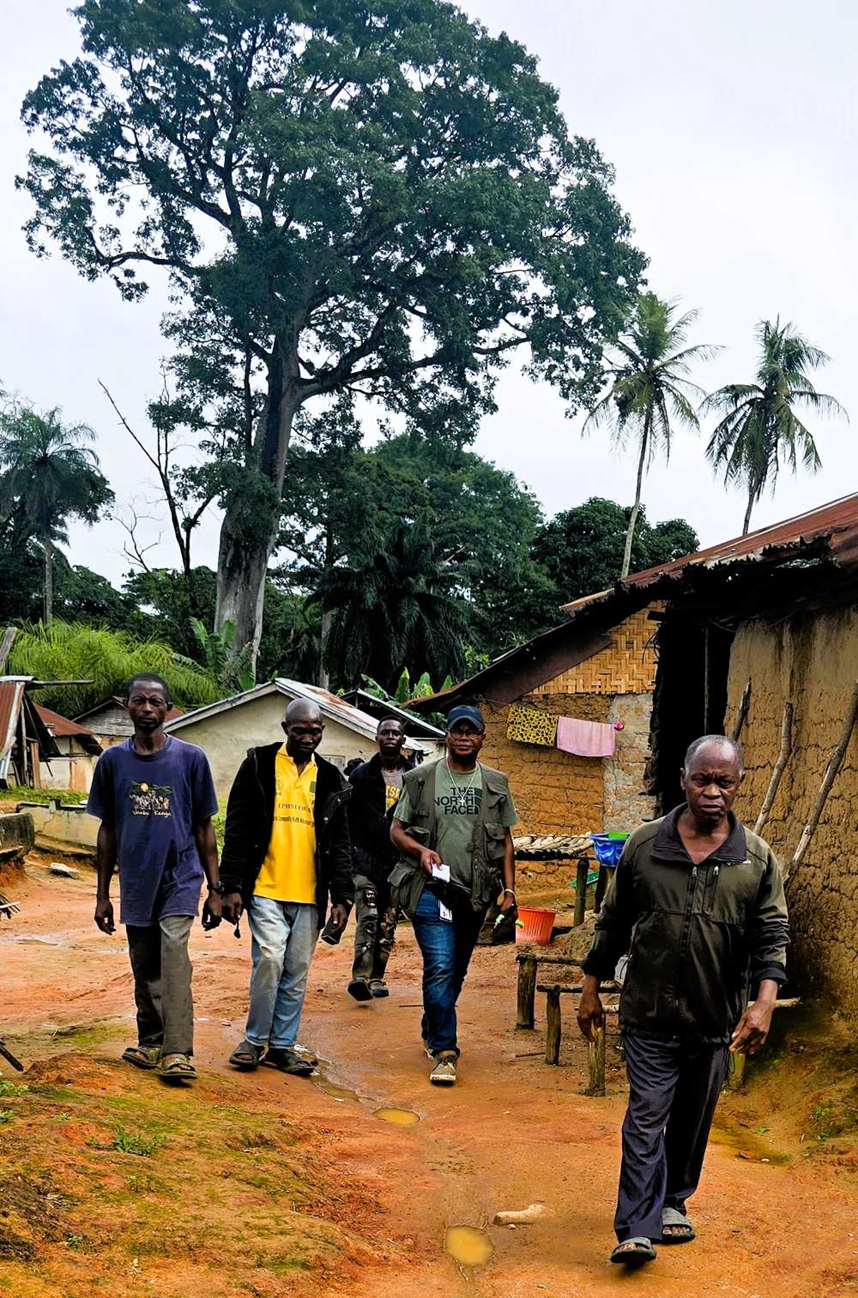
Dr. Zumo later invited Ekklesia’s news crew to travel along with him to Totota, Bong County, where he met distinguished Liberian scholar, Dr. Sakui WG Malakpa, a former professor at the University of Toledo, Ohio.
Author of BLACK PROFESSOR, WHITE UNIVERSITY, Dr. Malakpa has been visually impaired from childhood but despite such disability, he managed and excelled in his studies to the amazement of many who’ve known him and at one time became national orator for Independence Day celebration in Liberia.
Malakpa went to his native Liberia last year after President Joseph Boakai appointed him president for the Lutheran University. Prior to his return, Malakpa, born and raised in the Lofa forested town of Wozi, where White US Missionaries first planted Lorma Gospel, taught at the prestigious Toledo State University for many years.

Liberia’s law for now allows for capital punishment, a procedure involving death either by execution or hanging, and often lasts from 6: a.m. to 6: p.m., a tradition both Presidents William R. Tolbert and Samuel K. Doe followed through the 70s and early 80s, to punish citizens found guilty of treasonable offenses such as reckless and ritual murders.
Despite most U.S. states still use the death penalty as capital punishment, the so-called “international community,” poised to fund the nation’s most anticipated War & Economic Crimes Court has continued to pressurize Liberia to abolish it, using the “abolition” as a condition to support the trial-the same way they tied the eradication of the so-called “FGM” practices to Liberia receiving foreign aid under past administrations.
Conference facilitator Joseph Sackor was contacted by this writer to provide a comment for our story and asked if they intend to address the “time factor” during future meetings regarding a key subject as health but said little. “Good evening and thank you very much for your candid feedback,” Mr. Sackor, the head of Liberia Medical Mission replied to our inquiry.
Though some may view Zumo’s stance as being too extreme, there’s seemingly no easy way out of the drug crisis in Liberia, for as the saying goes, “a drastic disease requires a drastic remedy to be cured. “Any softer approach will be like what we have now,” Dr. Zumo insists, saying, “We can’t wish this problem away. What’s the value of treating, testing, rehab but no deterrent to stem the flow?”
With the heavy flow of narcotics into Liberia and how they are being widely used by street gangs and teens, the drug issue has no doubt reached a crisis level here and it’s only a matter of time before authorities declare it an emergency.

But until the government of President Joseph Nyuma Boakai Sr. can act, small clinics like that of Zumo’s in the Paynesville suburb of Monrovia will continue to experience their fair share of the heavy burden this new disease is posing to youthful addicts, most of whom are wards and can’t even afford mere registration fees, let alone pay for detox procedures.
Still Zumo, a devout Christian isn’t much perturbed over this and says, he often tells his nurses not to turn back any patient especially if the individual’s condition seems life-threatening. He urges that they first do treatment and later discuss the payment but most never showed up at the clinic again.
Zumo opened this clinic in 2018 to help his community but the refusal by some patients to pay for services has badly affected his business, often shrinking the small clinic’s resources, and forcing Zumo and his wife Janet to dig deeper into their pockets to pay nurses and replenish medicines.
In defense of his proposed death penalty stance, he said drug dealers in Liberia are taking advantage of our country’s weak judicial system, plagued by widespread corruption, in which case he stressed, the government would have to introduce a much harsher punishment in order to halt the illicit drug trade.
“Drug pushers are taking advantage of our system. They must be dealt with harshly with different levels of punishment based on the amount of drug they are caught with,” he explained, citing Singapore’s own example concerning its use of the “death penalty” against drug smugglers.
He described illicit drug trade as a serious threat to any nation and advised that no one should treat the case of Liberia “lightly as its dangers over time are so severe that they could lead to a country’s collapse and destruction.” He cited Chinese society as an example and said the “opium” trade destroyed the “Qing Dynasty” during the 1800s, and the same later led to the loss of Hong Kong as well, per historical facts.
In Singapore, citizens and foreign travelers can now face execution, based on the volume of drugs (i.e., heroin) found in a person’s possession. On arrival at its port of entry, the immigration places a slip in the traveler’s passport that bears this warning: “DEATH FOR DRUG TRAFFICKERS UNDER SINGAPORE LAW.”
Speaking from his Baltimore office in Maryland, Friday, Dr. Zumo stressed that his suggestion will not only serve as a “deterrent” but rather the best solution to bring the menace under control. “That’s the only way we can bring this epidemic under control. No other soft measures will work. We are at war, a cold but dangerous war!”
Questioned if he would push for capital punishment for “addicts” who use “illegal” substances, he rejected such an idea and quickly added that those should instead receive a prison term: that is, if they refuse to undergo medical treatment as prescribed by doctors.
“However, drug users who refuse medical treatment and intervention; these users must be incarcerated and treated from prison in that closed setting.”
Read related stories here on Dr. Lawerence Amos Zumo: U.S.-based Christian News Magazine Global Ekklesia launches publication in Liberia, West Africa –
JUSES CHRIST IS COMING SOON! ARE YOU READY?