
“Stop thinking who’s Kpelle, Kissi, Lorma, or Grebo!”
…Bishop Philip Nelson
When Global Ekklesia hosted its first Digital Photo Lab training in September, no one knew the meeting would go beyond teaching young Christians how to shoot impactful, Christ-soul-winning photographs. It turned out the forum became a perfect moment where folks could candidly share their views concerning Liberia’s predicaments, two being, tribalism and partisanship. Both have and continue to cause divisiveness among Liberians, prompted by national politics. Bishop Philip E. Nelson, a former Rhode Island NY, pastor who returned to Liberia at retirement has witnessed it all, as Global Ekklesia reports.

By James Kokulo Fasuekoi|Editor-Publisher
Bishop Philip E. Nelson was probably the most elderly person in the room during Global Ekklesia’s recent Digital Photo Lab training in Monrovia, Liberia. A former Rhode Island, NY, preacher, he returned home from the U.S. and now lives in Careysburg, near the capital. He attended the one-day training not so much to learn how to shoot pictures but to share a story embedded in wisdom; unless Liberians change their behavior, blessing, he said, will continue to elude us.
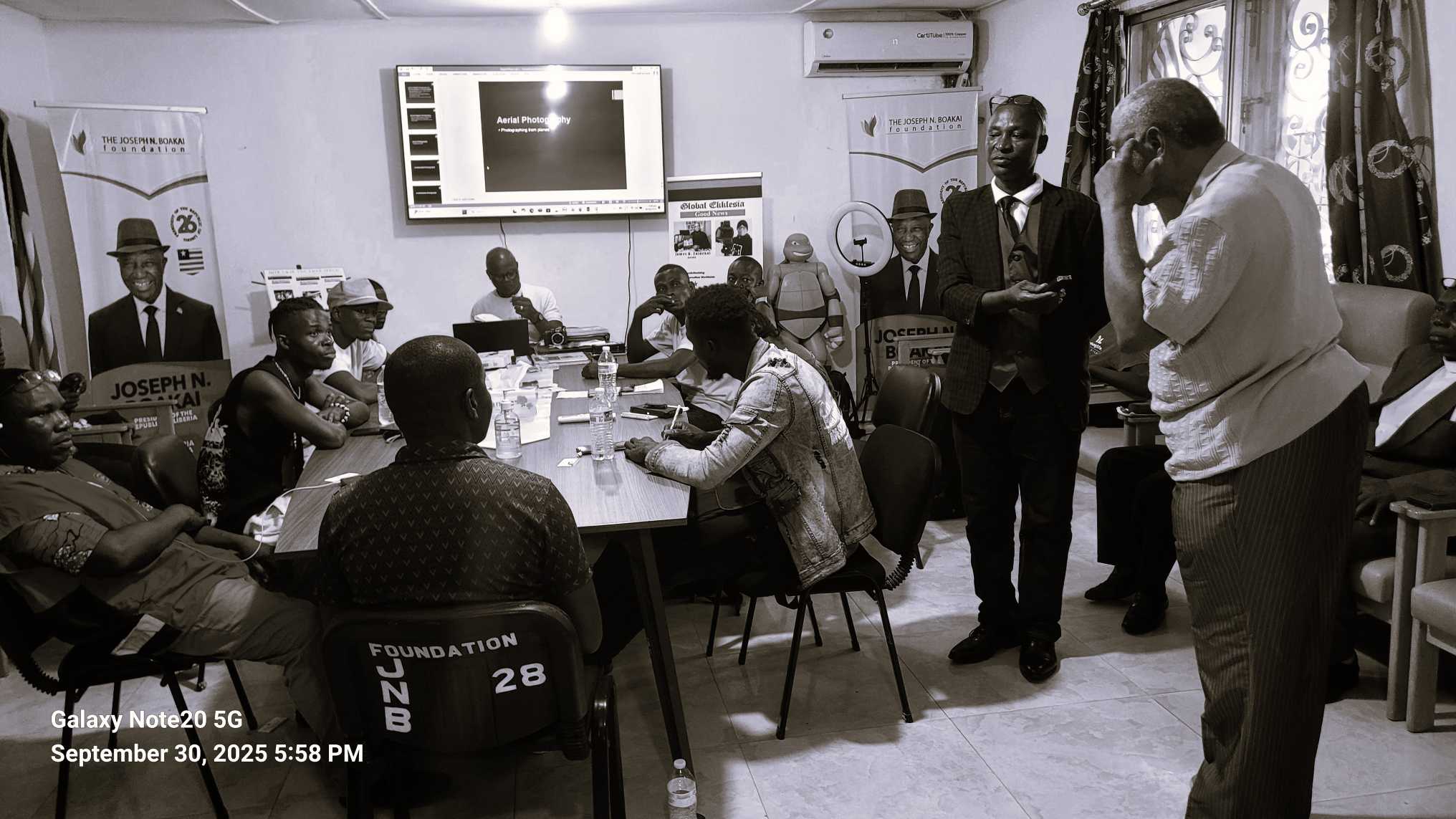
Addressing a group of young Christian reporters September 30, who represented nearly ten local churches that attended the day-long photo training held at President Boakai’s charity in Rehab, Paynesville, Father Nelson re-echoed a familiar message, telling his countrymen this nation is blessed with both mineral resources and natural beauty. But unless citizens can unite, put aside “Tribalism” and work together, they will continue to linger in “suffering till Christ comes.”

“Stop thinking who’s Kpelle, Kissi, Lorma or Grebo. It doesn’t make a difference where a tribe comes from. What makes a difference is that we can come together, and you can learn something from me, and I can learn something from you. But Liberians have forgotten this,” Rev. Nelson said. His remark came at the end of the seminar after watching a photographic slide on natural feathers such as mountains, rivers and landscape, produced by this writer-photographer.
“What he’s trying to tell us [referring to the presenter] is, if we were to take pictures and corroborate them; we would have the most beautiful views in the world.”
“Do things nationalistically, and not tribalistically,” he said, stating, “Some of us were friendly with people and never got to know their tribe,” a reference to the prewar era, a time the practice of “Tribalism” wasn’t as tense as it is today. Bishop Nelson is a Liberian who belongs to a family of descendants of freed Black U.S. Slaves, who migrated to present-day Liberia, and formed an ethnic group called Americo-Liberians.
Americo-Liberian dynasty ruled the country for well over a century before it was overthrown in 1980 by low-ranking Native army soldiers. The coup was prompted by the abuse of power, amid unending practices of nepotism under Settler’s rule. Jobs were offered to citizens on the basis of “connection” while scholarly opportunities to study abroad benefited only children of the rich and their affiliates, not the poor.

However, the coming to power of Master Sergeant Samuel Doe introduced a new dimension to the fold known as “Tribalism,” and to some extent, Nepotism, which only grew worse after two civil wars in the West African nation that broke out December 24, 1989.
But fighting the practice of “Tribalism” here in Liberia, is like battling against Prejudice, or Racism in the United States-a battle that is never won.
“Liberia is very wealthy in a way we [Liberians] should be enjoying and not wait till Christ returns…We should instead be progressing in a way that will bring changes to our lives,” he continued. Instead, according to Father Nelson, “We are not here thinking but fighting each other.”
Amid the fight, whenever someone tries to “make a change for themselves” he said, they would “brand them as something different.”
Nevertheless, he still sounded optimistic, saying “Liberia is moving there,” meaning, there will be a better outcome, but warned that “progress” would take long to come by because of the tribalistic tendency among Liberians.
He said that although he’s now “old,” he’s hopeful God will let him “see it,” meaning the glory!
He admonished Liberian youths to start “thinking differently and critically on Liberia’s future.”

Another speaker, Amanda M. Yarsiah, CEO of DiLTE, buttressed Father Nelson’s observations: “We Liberians talk about the ills too much rather than share the beauty of our country.” There’s “a lot of good things” happening here, she said, and cited “tourism,” saying, citizens could use that to showcase Liberia.
Rev. Johnson Sumo, the third bishop from Kakata, Margibi, who together with Father Nelson lead a conglomerate of Margibi churches agreed with Amanda. He therefore requested Global Ekklesia to take its Digital Photo Lab-the first of its kind in Liberia, to Kakata, expressing confidence that the training could perhaps give a career to some youths currently on drugs living there.
JESUS CHRIST IS COMING SOON! ARE YOU READY?