
Liberia: Iconic Civil War photographs, paintings on mining, agriculture featured at UN-Day Photo exhibit
By Our Staff Writer in Monrovia, Liberia
Monrovia-A photo exhibition staged here Monday, Oct. 26th, by the United Nations Office was initially meant to showcase the agency’s fine works in Liberia and around the world. Nevertheless, the exhibit also featured pieces of treasured war photographs shot by James Kokulo Fasuekoi, a former AP stringer and war photographer, plus a dozen artwork by Fato A. Wheremongar, a professional local painter.

Journalist Fasuekoi who shared a 1994 PUL’s Best Reporter of the Year Award with three other colleagues, together with Fato, a renowned Liberian painter, were invited by the country’s Arts & Culture Ambassador Kekura M. Kamara to put some of their iconic works on display at this year’s UN Day commemoration, staged in the front yard of the Foreign Ministry. Amb. Kamara, himself a seasoned television journalist, is a fan of historical arts and war photographs. He and Pres. Boakai are pushing a partnership with the UNDP to build a peace & reconciliation memorial in Liberia.

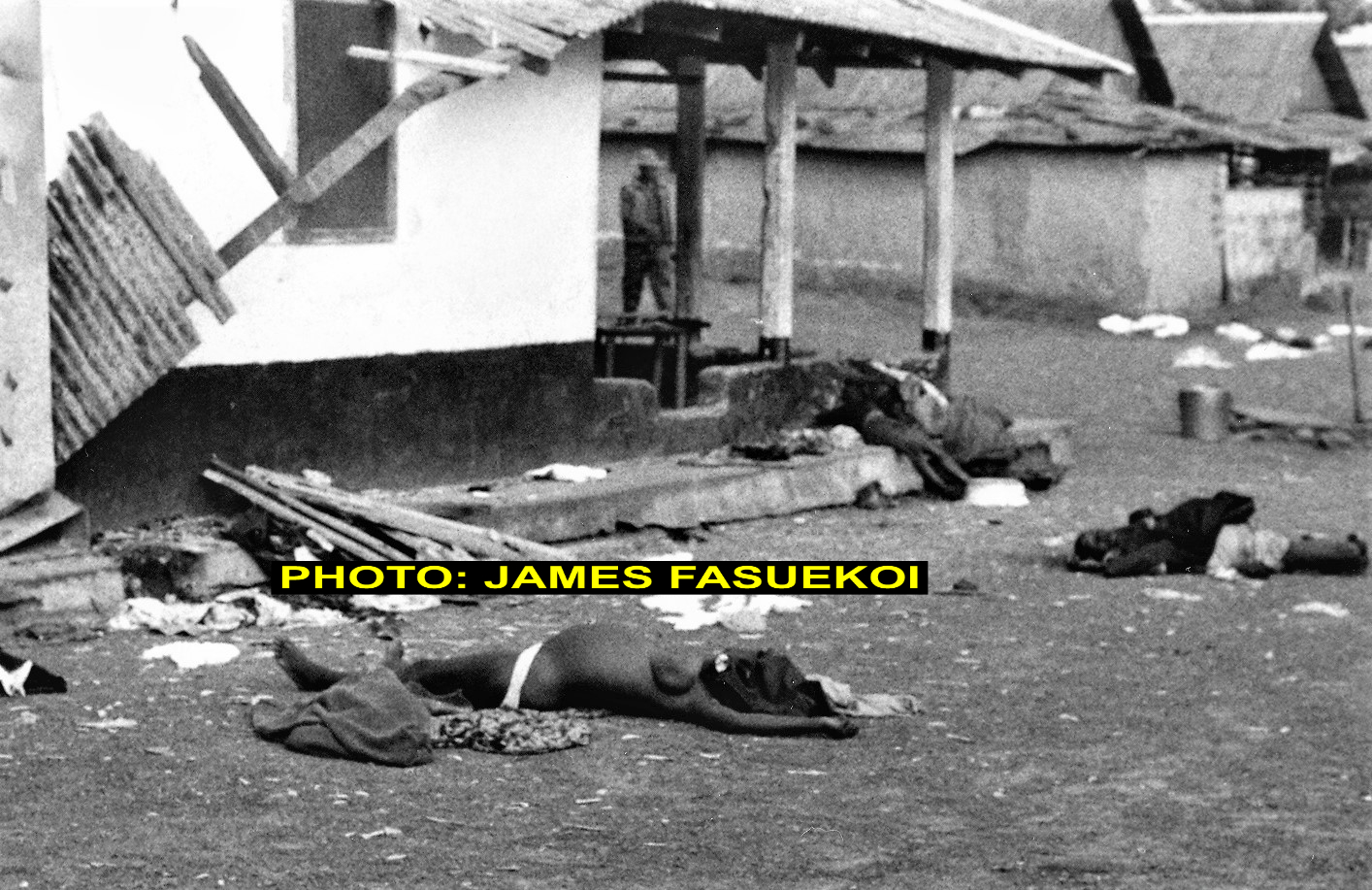
About a dozen of Fato’s collections on local mining, agriculture and road pavement found their way into the exhibit, while four iconic war photographs (from the first war) shot by Journalist Fasuekoi also made it on display during the day-long exposé. A piece on the Carter Camp Genocide June 6, 1993, plus another on the mass exodus of destitute civilians streaming into Monrovia who escaped the NPFL-ULIMO Tumanburg War of August 1992.

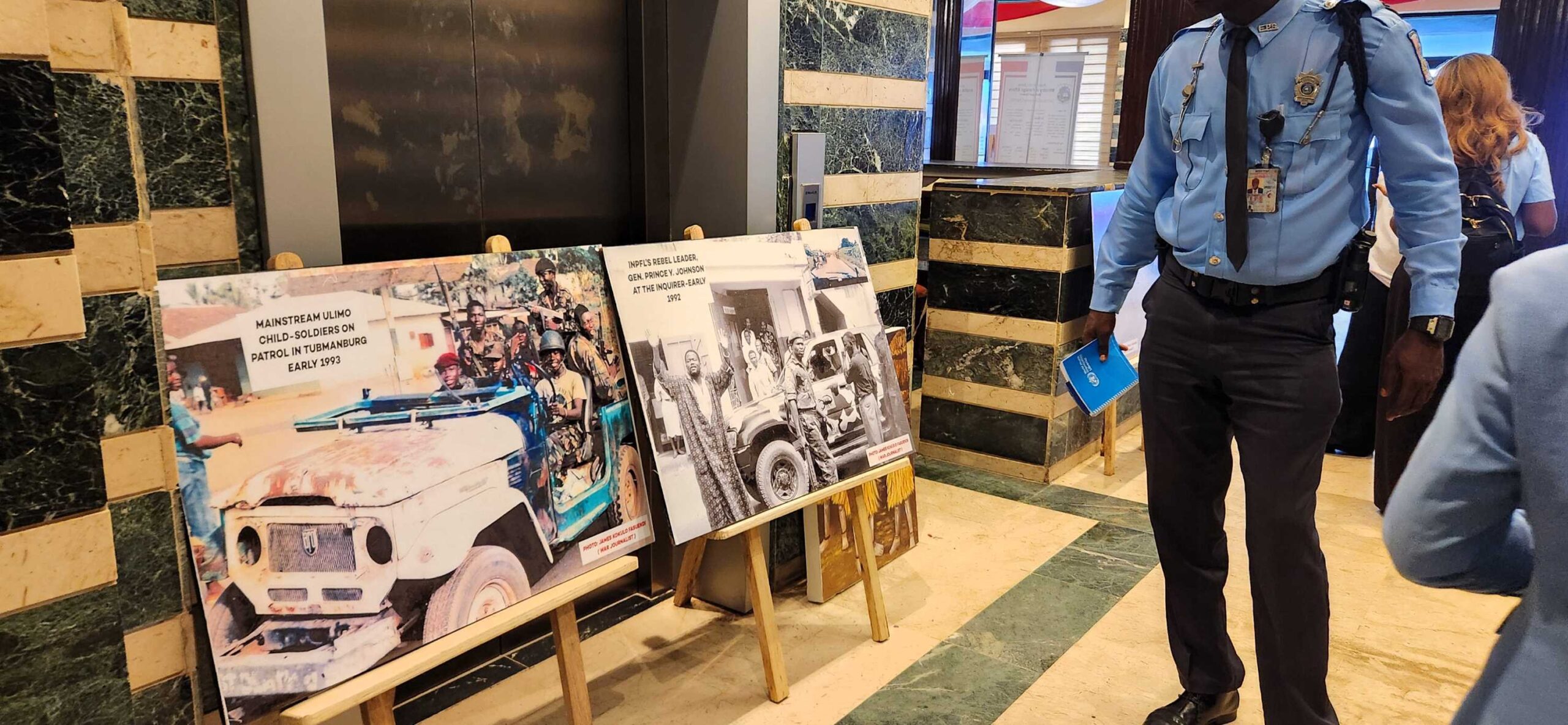
The last two by the war photographer captured the heightened military atmosphere of the era, with an erratic INPFL rebel leader Gen. Prince Johnson showing up at The Inquirer offices on Carey Street, unannounced, as he threatened to “kill” the paper’s staff if another war ever broke out in the city, while the last featured a group of mainstream ULIMO child soldiers crammed up in an old jeep, while on a patrol of Tubmanburg, Bomi, in early 1993.

Fasuekoi’s work went on wooden canvas, with the print size of 28 X 39, each mounted on a separate stand in the ministry’s main foyer next to the elevators. The images drew the attention of every viewer, including President Boakai, and also United Nations officials who are partnering with the present Boakai administration to erect a peace & reconciliation memorial museum in Liberia.
Children became the most vulnerable target group, aside from women, children and the elderly, by warring factions throughout both civil wars. The majority experienced forced labor, sexual exploitations by faction’s commanders, while being recruited into vicious killers. Others became homeless after they lost their parents to the war.

Monday’s photo exhibition, staged in the foyers of the Foreign Affairs Ministry, formed part of this year’s UN events to mark its founding. The UN was formed at the end of World War II, by 50 nations, according to the agency’s website. Its purpose includes maintaining international peace, security, protecting human rights, as well as giving humanitarian help to people in need worldwide.
The country experienced two separate bloody civil wars between December 1989-2003. Monday’s photos exhibition stirred up memories of those brutal wars, with some of the images so horrific that some visitors became glued to those exhibits, while some returned a second or third time to watch them.

The expose opened soon after President Josephs Nyuma Boakai’s UN day speech. President Boakai led a tour of the photo gallery, followed by members of the diplomatic corps and senior UN representatives, among them were H.E. Christine N. Umutoni, UN Resident Coordinator, and Liberia’s UNDP Resident Coordinator, Amb. Aliou Mamadou Dia.
Liberia and the UNDP are said to be working together concerning the establishment of a proposed war or conflict memorial in the country, similar to those already built in Rwanda and South Africa. South Africa and Rwanda already have national memorial museums documenting each nation’s conflict history where research, peace education and public engagements are conducted.

It appears Liberia’s proposed memorial may not take the exact form of a typical “Genocide Memorial.” However, there are discussions concerning creating a model suitable to Liberia-with reconciliation & peace building as well as healing taking a center stage, in addition to the preservation of the nation’s war history. UNDP Resident Coordinator, Mamadou Dia described this effort as being “part of President Joseph Nyuma Boakai’s vision for national reconciliation, with the support of [the] UNDP.”
A case study group from Liberian, led by Minister of State without Portfolio, Madam Mamaka Bility, returned home a few months ago, after they visited similar national memorials in South Africa and Rwanda. Ambs. Mamadou Dia and Kekura M. Kamara were part of that delegation. Its mission, accordingly, was to examine the South Africa-Rwanda models then carve one that suits Liberia’s own future needs.
Banner photograph: A presidential security guard Monday, takes a glance at some of War Journalist Fasuekoi’s iconic wartime photographs of the leader of the defunct INPFL, Gen. Prince Y. Johnson in Monrovia, and members of mainstream ULIMO’s Small Boys Unit (SBU), or child soldiers in Tubmanburg.
ADDITIONAL PHOTOS FROM THE UNITED NATIONS PHOTO EXHIBITION IN MONROVIA


Editor’s Note: Journalist/Author James Kokulo Fasuekoi is Editor-Publisher for Global Ekklesia.
