
Liberia: Pres. Boakai’s concept of a war memorial is not solely about punishing ‘perpetrators’ but to seek healing, reconciliation via dialogue
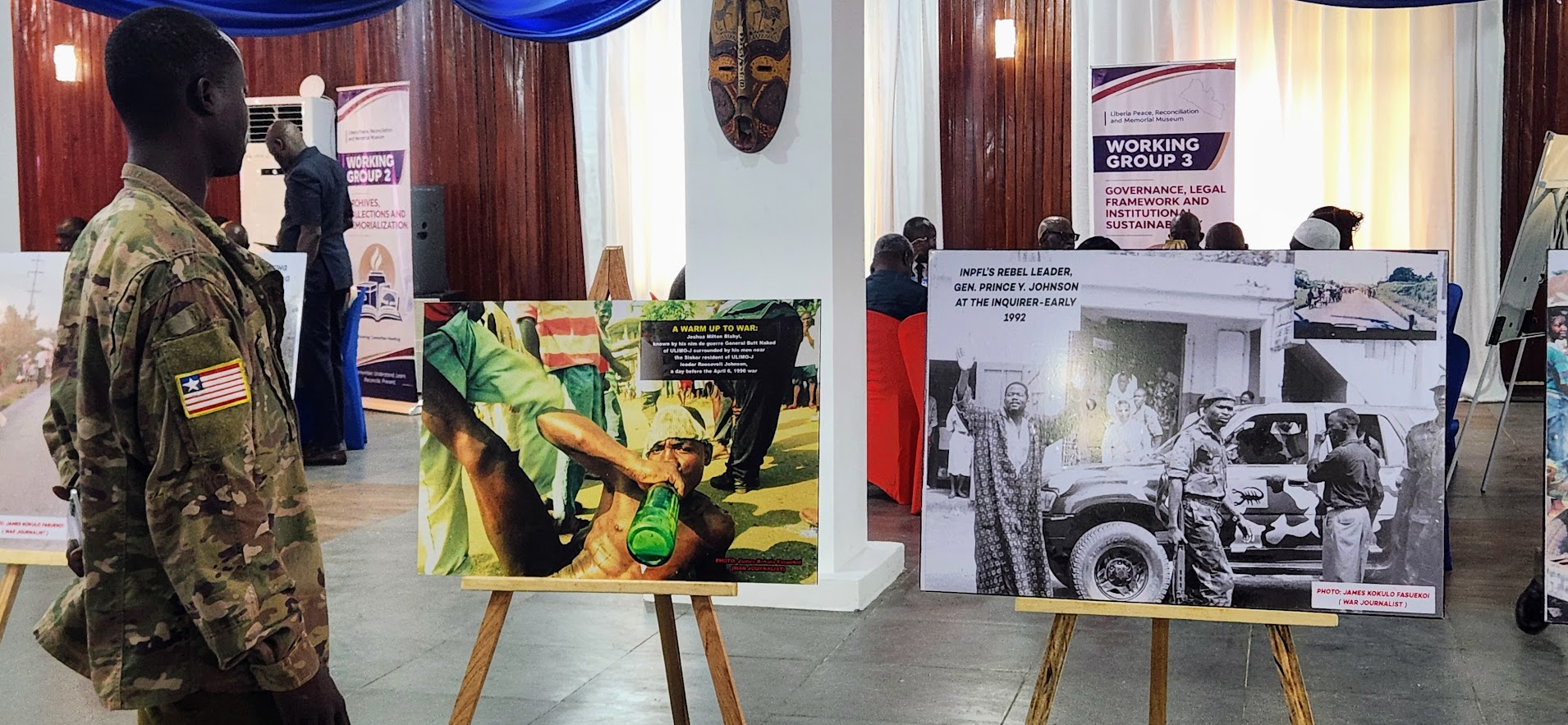
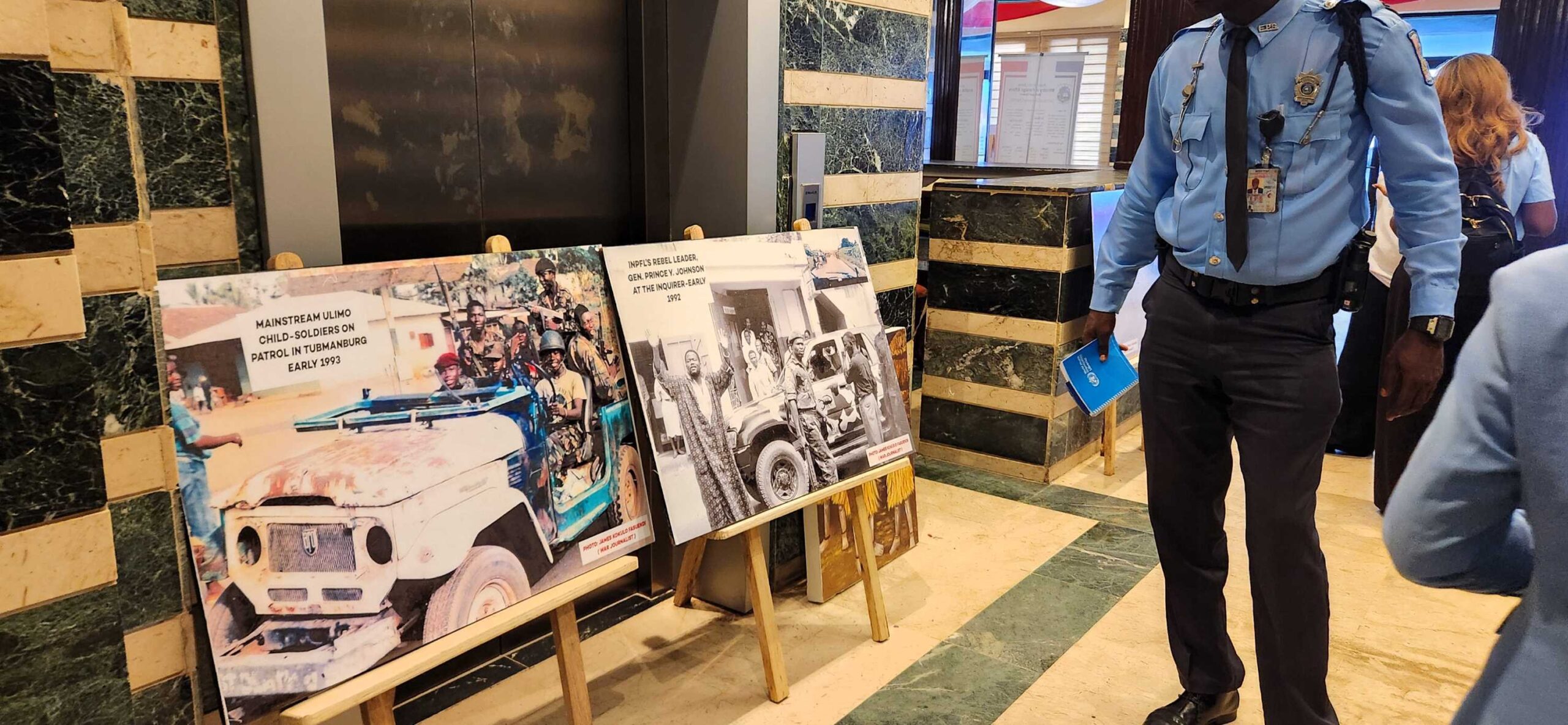
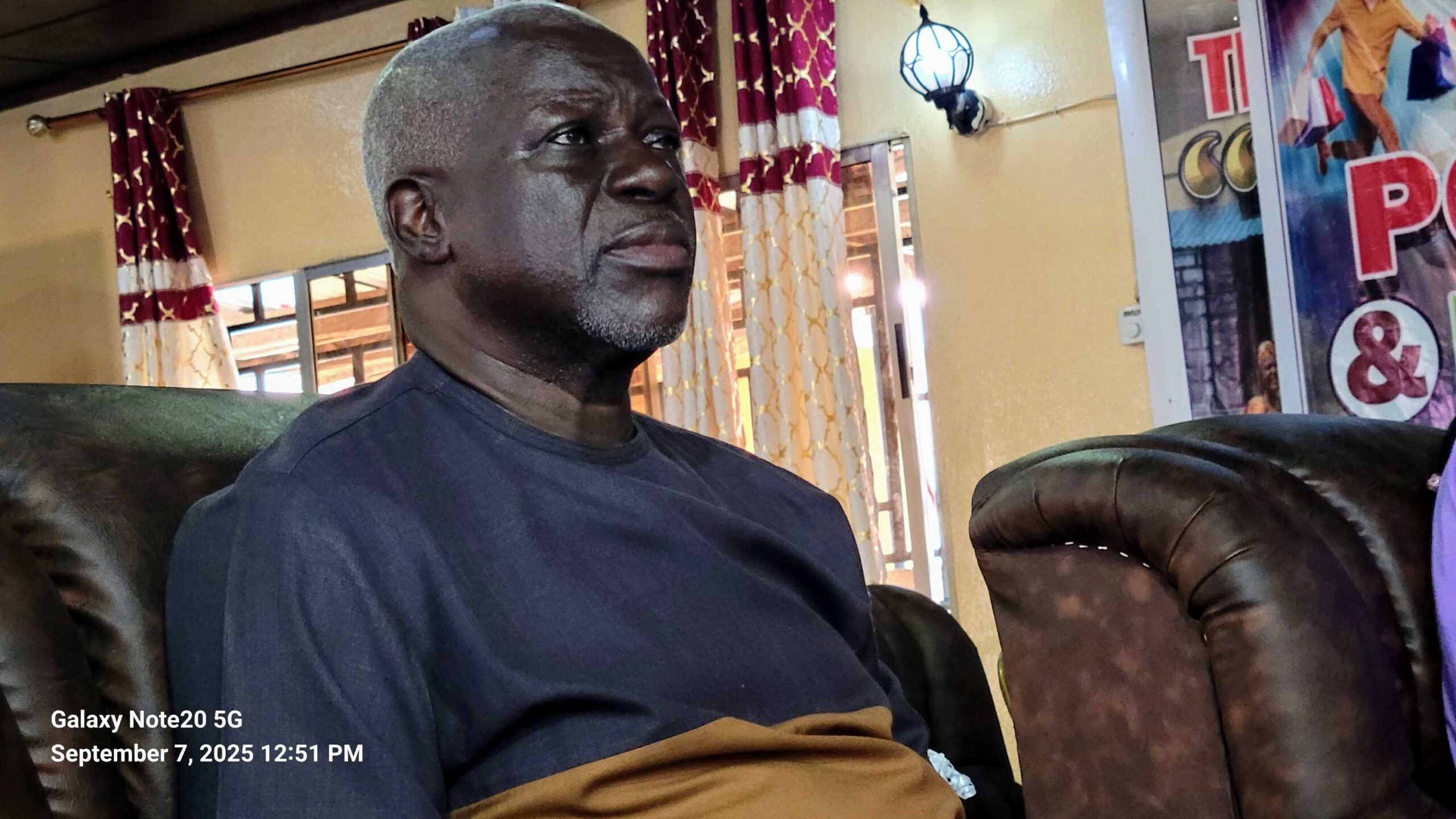
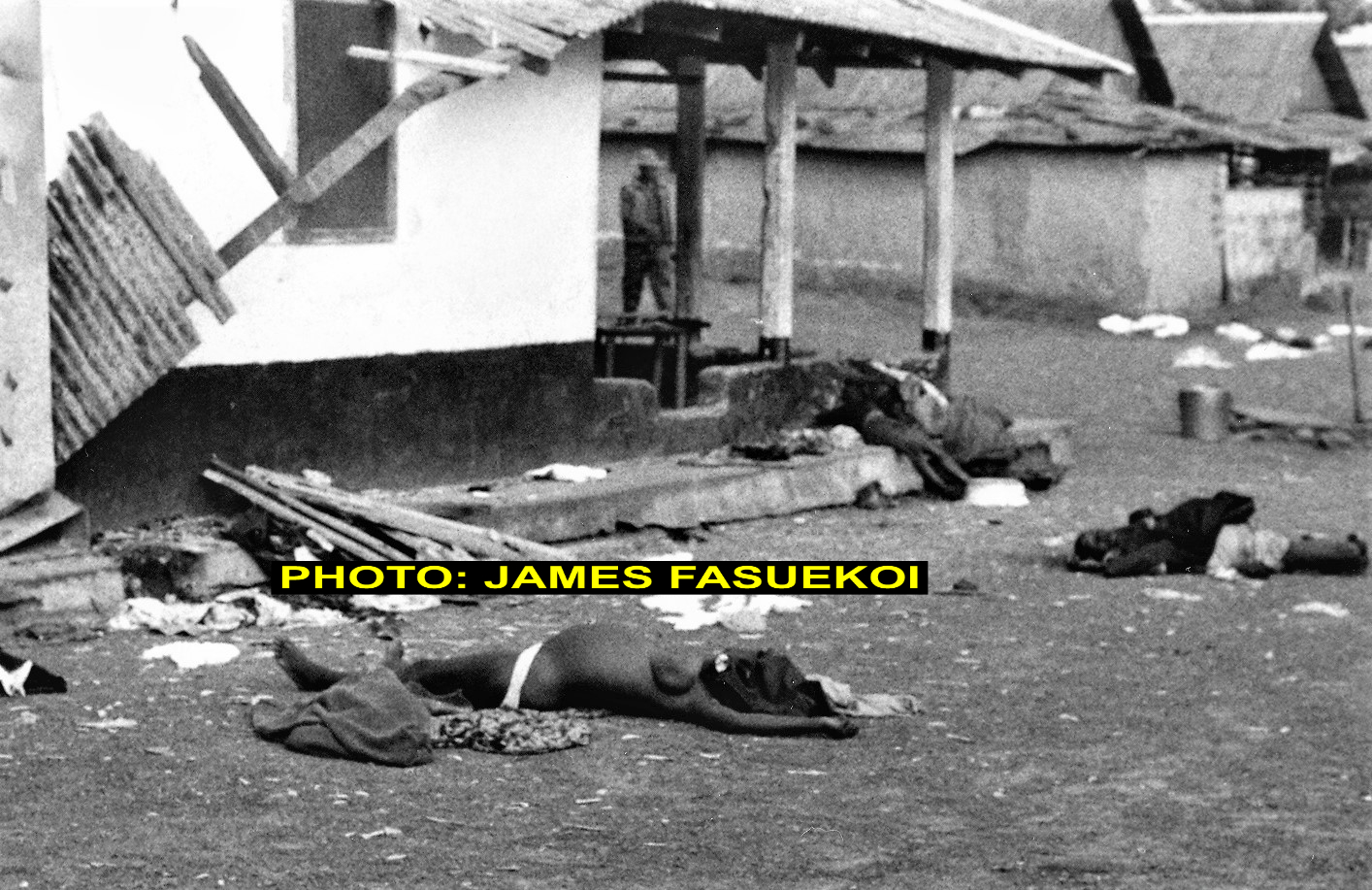
Banner photograph: A young security guard, probably not yet born when the civil war broke out, stood still to look at civil war photographs captured by James Kokulo Fasuekoi
There was a time when people became terrified by rumors spread around Liberia that the whole idea behind the proposed creation of a war crimes tribunal here was meant to arrest and prosecute “perceived enemies” of certain politicians, particularly, ex-warlords by locking them up for life, and perhaps throw the prison keys in the Atlantic. However, after participating in last week’s National Peace, Reconciliation and Memorial Museum Conference in Monrovia, it’s only fair to argue that that assertion is indeed far from the truth, as Global Ekklesia’s Editor-Publisher writes.


A steering committee set up by Liberia’s President Joseph Nyuma Boakai, commenced its first section here at the Executive Pavilion in Monrovia, from November 16-18, 2016. Headed by Madam Hadja Mamaka Bility, Minister of State without Portfolio, and co-chaired by the UNDP Resident Representative, Ambassador Aliou Mamadou Dia, this committee’s tasks include finding a strategy that would help bring a closure to the country’s bitter past, dating as far back to 1822, a period in which Americo-Liberians arrived. This proposed project, for the most part, is set to build a huge war memorial, one that will vividly record the memories and stories of war-survivors and victims. In a way too, it will record the stories of soldiers and rebel-fighters who inflicted, or perpetrated “pains” upon their people: all will be done in a more dignified fashion with one goal-heal, reconcile and unit Liberians, according to local steering committee officials and also memorial museums experts from Rwanda and South Africa who attended the three-day meeting in Monrovia. But as the committee repeatedly emphasized in its resolutions at the end of a three-day sitting, this move by the government of President Boakai isn’t entirely about “punishing” a particular “warlord,” “tribe” or “faction” for whatever role(s) they played during those crises per se. The following paragraph, taken from Resolution: Vision & Historical Scope-21, bears witness to this fact: “…neither a courtroom nor an instrument of accusation but a place for historical illumination, reflection, dialogue and nation-building. The same idea is clearly expressed in passage 23, under the same sub-heading: “Adopts the Vision of the Museum: to promote national unity, education and reconciliation; to contribute to healing and closure while providing space for remembrance; to preserve and present factual, evidence-based accounts of Liberia’s history; to allow differing and even contradictory narratives to coexist; and to uphold the principle of Nunca Mas (“Never Again”), the Museum being neither a courtroom nor an instrument of accusation but a place for historical illumination, reflection, dialogue and nation-building.” “Nunca Mas” is a Spanish word, per Google’s definition, meaning, “Never Again.” This vision by President Joseph Boakai, Sr. is in absolute contrast to the “narration” propagated by the Weah’s government concerning the WCC especially during its final years in office. The regime is reported to have promised special “protection” for ex-warlords against prosecution for “crimes” including extra-judicial killings they may have carried out during war, providing such “warlords” would help propel the CDC’s presidential aspirant to power. Gen. Prince Johnson (later, senator for Nimba County), took the bait, or so it seems. After Weah’s party won elections in 2017, former President George Weah along with certain CDC’s officials stood by their promise, doing all within their power to at least provide temporary protection for faction’s leaders like late Gen. Johnson, a key player in the first war-who captured and tortured President Samuel Doe to death! In one particular instance for example, a city mayor for Monrovia, Jeff T. Koijee-CDC, snapped at the then justice minister for not intervening to ‘verbally’ protect Prince Johnson in wake of the arrival of US War Crimes prosecutor, Alan White to Liberia. Mr. White had gone to Liberia to help lobby the parliament and the regime so they could work to establish a war crimes court for the country. Koijee, said to be a “human rights” “activist” at one point, on the other hand further rallied support for Gen. Johnson, while calling out party’s supporters to antagonize Prosecutor White for daring to push such an agenda. Sitting through the three-day deliberations, journalists and conference-attendees soon discovered that the idea behind Boakai’s War Crimes Court (WCC) per se, isn’t just about “punishing” alleged “doers” perpetrators of heinous war crimes. Instead, the government wants to find closure to the country’s dark chapter. To do so successfully, President Boakai believes this nation must confront its “dark past” and not run from it, as other regimes like Sirleaf’s and Weah’s did; and do so in the most reasonable manner, not through “accusations’ or in an antagonistic fashion, all with the goal to achieve healing, reconciliation and national unity. To achieve this goal, experts from the Rwanda and South Africa Peace, Reconciliation and Memorial Museums, provided the conference with a “roadmap” Liberia could use through its own journey. One of the experts’ key messages centers around Liberians’ willingness to firstly view themselves as “Liberians,” and not as “tribes.” (Notice during the war years, people leaned on the “tribe” to provide protection. Now, national “politic” has taken the place of the “tribe”, further causing bitter division among Liberians, a case that needs attention under this memorial project). For three days (Nov. 16, 17, & 18), the steering committee broke up into Five Working groups, and officially adopted the name: Liberia Peace, Reconciliation and Memorial Museum” following the launching by President Boakai, Sr. Fine arts by Artist Fato, plus civil war photographs by this writer were put on exhibition throughout the three-day deliberations. Meanwhile, the steering committee is expected to meet after 90 days to continue work. Below is a pictorial by James Kokulo Fasuekoi


